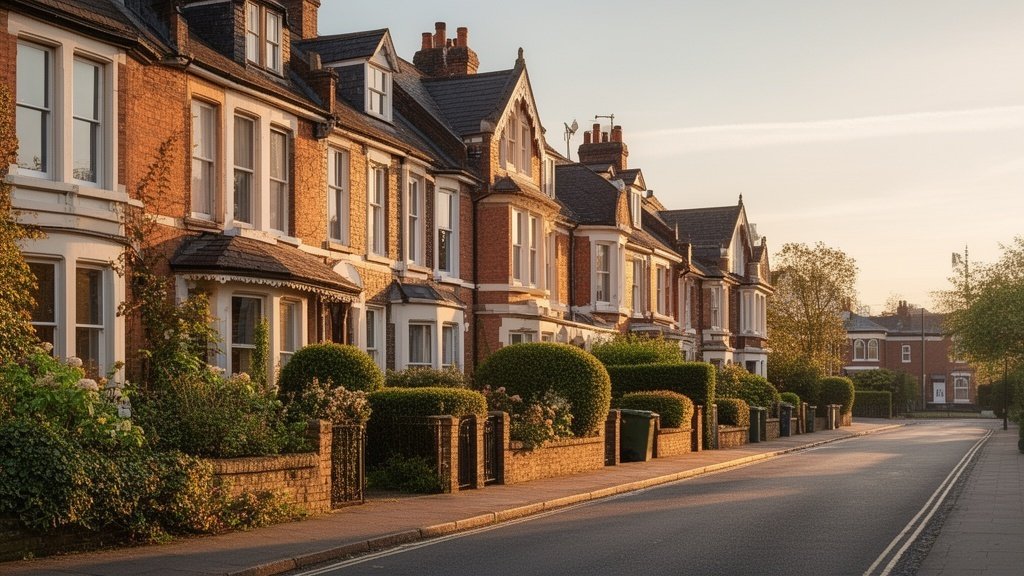
Coventry Surveyors sees more Victorian and Edwardian properties than any other property type. The streets of Earlsdon, Chapelfields, Radford, and Hillfields are packed with beautiful period terraces and semis that buyers love — but these properties can hide a long list of issues that only a specialist Level 3 Building Survey will uncover.
Why Victorian and Edwardian Homes Are Different
Properties built between roughly 1837 and 1914 were constructed using building methods, materials, and standards that are fundamentally different from modern construction. They were built to last, and many have done so admirably — but they require a specific kind of knowledge to assess properly. They breathe differently, settle differently, and fail in different ways from modern homes.
The key characteristics of Victorian and Edwardian construction in Coventry include:
- Solid brick walls (no cavity) — typically 9 inches thick in main walls
- Lime mortar and lime plaster rather than modern cement-based products
- Suspended timber floors over a sub-floor void
- Pitched roofs with natural slate or clay plain tile coverings
- Original single-glazed timber sash or casement windows
- Lead pipework in many pre-1970 properties
- Older electrical wiring — often rubber-insulated or aluminium
- No formal damp-proof course in many properties, or a slate DPC that may have failed
The Most Common Defects We Find in Coventry's Period Properties
After surveying hundreds of Victorian and Edwardian properties across Coventry, our team has built up an intimate knowledge of their most frequent weaknesses. Here are the issues we encounter most regularly:
1. Damp — Rising, Penetrating, and Condensation
Damp is the single most common issue in Coventry's older housing stock. Victorian properties were designed to be permeable — moisture moved in and out through the walls and evaporated harmlessly. Modern interventions — impermeable cement render, vinyl wallpaper, draught-proofing, and central heating — can disrupt this balance, trapping moisture within the fabric and causing damage.
Our surveyors understand the difference between genuine rising damp (relatively rare), penetrating damp from failed pointing, gutters, or window seals (very common), and condensation presenting as damp (extremely common). Misdiagnosis of condensation as rising damp has resulted in millions of pounds of unnecessary "remediation" work being carried out on perfectly sound Victorian homes across the country. We are not fooled.
For a detailed guide, see our article on damp in Coventry properties.
2. Chimney Stacks and Flues
Most Victorian and Edwardian properties in Coventry have multiple chimney stacks, and these are a perpetual source of maintenance requirements. Defective pointing, cracked flaunching, failed lead flashings, and spalled brickwork are all common findings. Internally, redundant fireplace openings that have been blocked off without adequate ventilation create conditions for severe condensation damp within the chimney breast.
If any fireplace is to be used — for a wood-burning stove or gas fire — we will always recommend a HETAS or Gas Safe engineer's inspection of the flue before installation.
3. Roof Coverings — Slate and Clay Tiles
Original natural Welsh slate — used on most pre-1900 Coventry properties — is a superb roofing material that can last 80–150 years. However, the nails that hold the slates in place do not last as long. "Nail sickness" — where iron nails corrode and fail — is a very common finding in Coventry's Victorian roofs. Once nail sickness develops, slates begin to slip at an accelerating rate, and a whole-roof re-covering becomes necessary.
Concrete interlocking tiles, often fitted as a cheap replacement for original slates in the 1970s and 1980s, have their own issues — they are heavy, and the original roof timbers may not have been strengthened to take the additional weight. We check for signs of roof spread on all period properties.
4. Suspended Timber Floors
Victorian properties have suspended timber ground floors over a sub-floor void. This void must be adequately ventilated to prevent the build-up of moisture and the risk of dry rot (Serpula lacrymans) and wet rot. Blocked or inadequate air bricks, poorly ventilated sub-floor spaces, and contact between timber and soil or debris are all common findings. Dry rot in particular requires urgent, specialist treatment and can be extremely expensive to eradicate.
5. Lead Pipework and Older Plumbing
Many Coventry properties built before the 1960s still have lead service pipes connecting to the water main. Lead in drinking water is a health concern, and the Water Industry Act 1999 gives water companies the responsibility for lead pipes in the public highway — but the property owner remains responsible for lead pipes within the property boundary. Replacement of internal lead pipework is advisable, particularly in properties occupied by children or pregnant women.
6. Electrical Systems
Original rubber-insulated or lead-sheathed wiring, if still in situ, is seriously deficient and requires full rewiring. Properties with aluminium wiring installed in the 1960s and 1970s also require specialist assessment. Older fuse boards with rewirable fuses rather than modern RCDs provide inadequate protection. Our surveys always flag electrical systems where a specialist NICEIC or NAPIT-registered electrician's inspection is warranted.
7. Lime Mortar and Cement Repointing
Victorian brickwork was bedded and pointed in lime mortar, which is softer and more flexible than the bricks. This is intentional — lime mortar acts as a sacrificial material, allowing minor movement and weathering to occur in the mortar rather than causing the bricks to crack. When well-meaning owners or builders repoint with modern cement mortar, the cement is harder than the bricks. Movement and moisture are then forced into the bricks, causing them to crack and spall.
Inappropriate cement repointing is one of the most common forms of unintentional building damage we encounter in Coventry's Victorian streets. The remedy — raking out and replacing with lime — is labour-intensive and can be expensive for an entire elevation.
8. Asbestos-Containing Materials
While asbestos was not routinely used in Victorian and Edwardian construction, many period properties have been extended, modified, or partially refurbished using materials from the 1950s–1980s. Asbestos cement roofing on rear additions, Artex textured coatings containing chrysotile, asbestos rope seals in fireplaces, and floor tiles containing asbestos are all commonly encountered. We flag suspected asbestos-containing materials for specialist management or removal.
"The Level 3 survey was worth every extra penny. The Level 2 would never have found the dry rot. We renegotiated £12,000 off the purchase price and completed on the property." — Coventry Surveyors client, Chapelfields
Choosing the Right Survey for a Period Property in Coventry
For any Victorian or Edwardian property in Coventry, we strongly recommend a Level 3 Building Survey. The additional depth of investigation, the explanation of causes and remediation options, and the greater access typically achieved (inspecting roof voids, sub-floor spaces where accessible, and probing suspect materials) provides information that is simply not available in a Level 2 report.
The cost difference between a Level 2 and Level 3 survey is often a few hundred pounds. The value of the information the Level 3 provides — as evidenced by the case studies throughout this guide — can run into tens of thousands.
FAQs: Surveying Period Properties in Coventry
Standard Victorian properties are generally insurable through mainstream insurers, though premiums may be slightly higher than for modern homes. Properties with particular issues — subsidence history, non-standard construction, previous significant claims — may require specialist insurance. Our survey reports include an insurance reinstatement figure to help you ensure you have adequate buildings insurance coverage.
Standard maintenance and like-for-like repair work does not require planning permission. However, if the property is listed or in a Conservation Area (several parts of Coventry are designated Conservation Areas), you may need Listed Building Consent or Conservation Area Consent for works affecting the external appearance. Our surveyors will flag if we believe a property may be affected.
It depends on the nature and extent of the work required, and the purchase price agreed in light of that work. A well-surveyed, well-negotiated Victorian property requiring sympathetic renovation can be an excellent investment in Coventry's market — particularly in desirable areas like Earlsdon. The key is knowing exactly what you are taking on. That is what our Level 3 survey provides.
A solid wall property has external walls of one solid material (usually brick or stone) without the air gap of a modern cavity wall. Solid walls provide less thermal insulation than cavity walls and are more susceptible to penetrating damp if maintenance is neglected. However, they cannot be injected with cavity wall insulation — external or internal wall insulation systems are the solution, which is an important consideration for energy efficiency assessments.
Look for a RICS-regulated firm with demonstrated experience in older properties and local market knowledge. At Coventry Surveyors, all three of our principal surveyors have extensive experience with Coventry's Victorian and Edwardian housing stock. Read our team profiles or contact us to discuss your specific property.
Book a Level 3 Survey for Your Period Property
Do not take the risk of buying a Victorian or Edwardian property in Coventry without a thorough Level 3 Building Survey. Our surveyors have the knowledge, experience, and tools — including moisture meters, thermal imaging, and specialist inspection equipment — to assess older properties comprehensively and accurately.
To book your survey, explore our services, check whether your property is in our coverage area, or contact us directly. We look forward to helping you make an informed decision.
Buying a Period Property in Coventry?
Don't risk it without a Level 3 Building Survey. Get a free, no-obligation quote from our expert surveyors today.
Request Free QuoteRelated Articles
Book a Period Property Survey
Expert Level 3 Building Surveys for Victorian and Edwardian properties across Coventry.