Damp is the word that makes most property buyers nervous — and understandably so. But here's the truth: damp is extremely common in UK properties, especially older ones, and it doesn't always mean disaster. What matters is understanding what type of damp you're dealing with, how serious it is, and what the remediation actually involves.
As a surveyor who has inspected hundreds of Coventry properties, I can tell you that damp is present in some form in the majority of Victorian and Edwardian terraces I survey. That doesn't mean they're all uninhabitable — far from it. But it does mean you need accurate, independent information before you make a buying decision.
The Three Main Types of Damp
Rising Damp
Rising damp occurs when groundwater travels upward through a building's walls by capillary action — essentially the same process that draws water up through a paper towel. It typically appears in the lower metre or so of a wall, leaving a distinctive 'tide mark' and often causing the plaster to stain, bubble or crumble. White salt deposits (efflorescence) on the face of walls are another common sign.
In older Coventry properties — particularly Victorian terraces built before the use of modern damp proof courses — rising damp is relatively common. Most pre-1900 buildings were constructed without any damp proof course (DPC) at all. Later properties had early-generation DPCs installed, but these can fail over time, typically after 30–50 years.
The cost of remediation varies widely. Chemical injection DPCs (the most common modern solution) typically cost £500–£2,000 for a typical Coventry terrace, plus replastering. However, many properties labelled as having 'rising damp' by less scrupulous contractors are actually suffering from condensation — which has an entirely different and far cheaper fix.
Penetrating Damp
Penetrating damp enters a building horizontally through walls, roofs or around window frames, usually as a result of a specific defect — a cracked render, a failed pointing joint, a damaged roofing tile, a leaking window seal. Unlike rising damp, it can appear at any height and tends to create localised damp patches rather than a uniform band across the bottom of walls.
Penetrating damp is generally easier to fix than rising damp, because it has a clear, identifiable cause. Our surveyors always try to identify the source and not just the symptom — telling you "there's damp on this wall" isn't helpful. Telling you "there's damp on this wall caused by a failed flashings detail over the bay window above" is what a proper survey provides.
In Coventry properties, we commonly find penetrating damp in: bay windows (where lead or aluminium flashing has failed), behind chimney stacks (failed flaunching), at the base of external walls where render has cracked, and around incorrectly fitted or aging double-glazed window frames.
Condensation Damp
Condensation is by far the most common moisture-related issue in UK properties — and it's often misidentified as rising damp. It occurs when warm, moist air meets a cold surface and the moisture in the air condenses on it. Black mould on walls and ceilings (especially in bathrooms, kitchens and north-facing bedrooms), moisture on windows, and musty smells are the classic signs.
Condensation damp is a lifestyle and ventilation issue, not a structural defect. Improving ventilation, heating the property more consistently, and using extractor fans can resolve it without expensive damp-proofing works. When we survey a Coventry property and identify what appears to be condensation rather than rising damp, we'll tell you clearly — along with practical advice on how to address it.
What Our Coventry Surveys Find About Damp
Based on our surveying experience across Coventry, here's how common different types of damp are in the city's housing stock:
| Damp Type | Prevalence in Pre-1919 Properties | Prevalence in 1920–1970 Properties | Typical Remediation Cost |
|---|---|---|---|
| Rising Damp | High (30–40%) | Medium (15–20%) | £800–£3,000 |
| Penetrating Damp | Medium (20–30%) | Medium (15–25%) | £300–£2,000 |
| Condensation | Very High (50–60%) | High (40–50%) | £0–£500 |
How Our Surveys Identify Damp
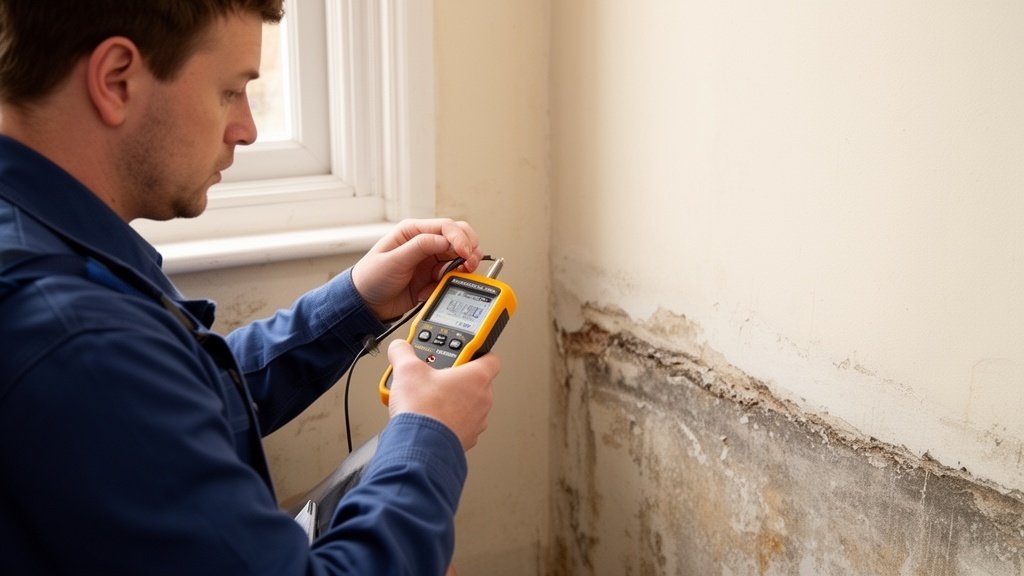
Our RICS regulated surveyors use a combination of tools and techniques to assess damp in Coventry properties:
- Protimeter moisture meter: Measures electrical resistance in walls to detect elevated moisture levels.
- Thermal imaging camera: Identifies cold spots and moisture patterns invisible to the naked eye — see our article on thermal imaging surveys.
- Visual inspection: Examining tide marks, staining patterns, plaster condition, paint peeling, efflorescence.
- Probing: Checking for softened or deteriorated materials below surface finishes.
Crucially, we don't just measure damp — we interpret what the readings and visual evidence mean. A moisture reading above a certain threshold doesn't automatically mean rising damp; it could indicate a recent plumbing leak, condensation, or simply a recently decorated surface that hasn't fully dried.
Using Damp Findings to Negotiate
If our survey identifies damp in a property you're buying in Coventry, you have options. You can ask the seller to undertake remediation works before completion, request a price reduction to reflect the cost of repair, or ask for a retention — where part of the purchase price is held back until works are completed satisfactorily. Read our guide on using your survey to negotiate price reductions for more detail.
Damp FAQs
Not necessarily. Minor damp issues are common and manageable. Serious, widespread structural damp that will cost tens of thousands to fix, or damp that has caused significant timber decay, might be grounds for renegotiation or withdrawal. The key is having an accurate, independent assessment of the severity and likely cost — which is exactly what our surveys provide.
This varies widely depending on the extent of the problem. A chemical injection DPC for a single room in a Coventry terrace might cost £300–£800; for a full ground floor it could be £1,500–£3,000. Replastering affected walls adds further cost. Always get at least two independent quotes, and be wary of any damp-proofing company that diagnoses rising damp without thorough investigation.
Yes, in most cases. Minor damp rarely affects mortgage approval. Significant structural damp might prompt a lender to request a specialist report or require remediation before release of funds. Our surveys give lenders the confidence they need by providing a clear, professional assessment.
Worried About Damp in a Coventry Property?
Our RICS surveyors will give you an honest, independent assessment. Get a free quote for your building survey today.
Request Free QuoteRelated Articles
Book a Damp Survey
Coventry Surveyors — accurate damp diagnosis before any remediation work begins.