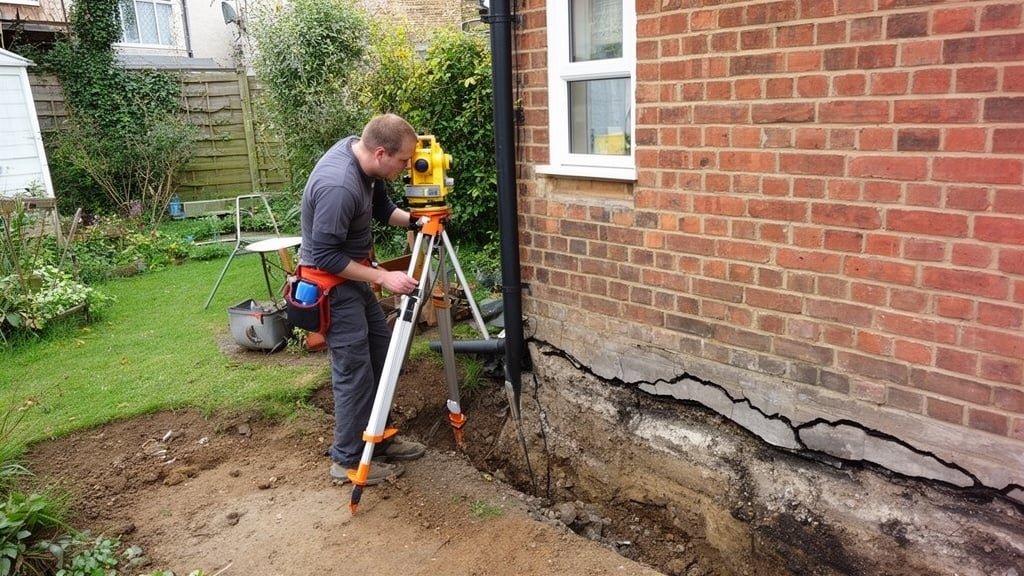
The word "subsidence" can cause panic in any homebuyer or property owner. In Coventry, where much of the housing stock is built on clay subsoils, it is a concern that our surveyors encounter regularly. This guide explains what subsidence is, how to spot it, and crucially, what to do if your surveyor flags it.
What Is Subsidence?
Subsidence is the downward movement of the ground beneath a building's foundations. When the soil underneath a property loses its ability to support the structure above, the building begins to sink — and because this sinking is rarely perfectly uniform, the structure is subjected to differential movement that causes cracking, distortion, and, in serious cases, structural failure.
Subsidence is one of the most significant structural defects a property can have, and it is rightly taken very seriously by surveyors, mortgage lenders, and insurers. However, it is also one of the most misunderstood. The vast majority of cracks in buildings are not caused by subsidence and have much simpler explanations — we will return to this important point shortly.
Important Distinction
Subsidence is the ground sinking beneath a building. Settlement is the normal, gradual compaction of soil under the weight of a new building. Heave is the upward movement of the ground. All three can cause structural problems, but they have different causes and require different solutions.
Coventry's Soil and Subsidence Risk
Coventry sits on a complex mix of geological formations. Significant portions of the city and its surrounds — particularly in the south and east — are underlain by Mercia Mudstone and Lias Clay formations. These clay soils are "shrink-swell" clays, meaning they expand when wet and shrink significantly during dry periods. This seasonal movement is one of the primary causes of subsidence in Coventry properties.
The problem is most acute during prolonged dry summers like those experienced in 2018 and 2022. The clay dries out, shrinks, and the foundations of buildings sitting on it begin to move. Properties with large established trees nearby are particularly vulnerable, as tree roots draw moisture from the soil over a wide area, accelerating clay shrinkage beneath foundations.
Coal mining also has a historical legacy in parts of the Coventry area. Properties in former mining areas may be at risk of ground movement related to the collapse of old mine workings — a different type of subsidence but equally serious. We always recommend checking coal mining records as part of pre-purchase searches when buying in affected areas.
Signs of Subsidence to Look For
Spotting potential subsidence requires careful observation. Here are the key warning signs our Coventry Surveyors look for during a building survey:
Cracks with Specific Characteristics
Not all cracks indicate subsidence, but cracks caused by subsidence tend to have certain features:
- Diagonal cracks running at approximately 45° from the corners of windows and doors
- Tapered cracks that are wider at one end than the other (usually wider at the top)
- Cracks that extend through both the external and internal surfaces of a wall
- Cracks wider than 3mm — anything above this threshold warrants further investigation
- Recurring cracks that keep reopening after being filled and redecorated
Hairline cracks, horizontal cracks in plaster (usually caused by shrinkage), and small cracks around window frames are all very common and usually have nothing to do with subsidence. The skill of a surveyor lies in distinguishing the benign from the serious.
Sticking Doors and Windows
When the frame of a building distorts due to ground movement, doors and windows can begin to stick, particularly in certain weather conditions. A door that sticks only in summer might simply be swelling in humidity; a door that increasingly fails to close regardless of the weather is more concerning.
Sloping Floors
Some floor slope is to be expected in older properties, but a significant or progressive slope can indicate foundation movement. Sloping floors in a property where the walls also show diagonal cracking is a combination that should trigger a specialist structural investigation.
Gaps Between Walls and Floors or Ceilings
Visible separation between skirting boards and floors, or between cornices and ceilings, can indicate differential settlement or movement within the building's structure.
Causes of Subsidence in Coventry
Understanding the cause of subsidence is essential because the appropriate solution depends entirely on the cause. The most common causes in Coventry are:
Tree Roots
Tree roots are the single most common cause of subsidence claims in the UK. Roots from large trees — particularly willows, poplars, oaks, and sycamores — can extend up to three times the height of the tree from its base. When they penetrate beneath a building's foundations, they can remove moisture from the clay, causing it to shrink and the foundations to sink.
The problem is particularly severe in properties on clay soils like those found across south Coventry. Removing the tree can sometimes solve the problem, but it can also cause "heave" — the clay rehydrates and swells, causing upward movement of the foundations.
Leaking Drains and Services
A leaking drain beneath a building can gradually wash away the fine particles from the surrounding soil, eventually leaving voids beneath the foundations. This is a very common cause of localised subsidence, particularly in older Coventry properties where clay or cast-iron drainage is now aged and prone to fracture.
Clay Shrinkage
During extended dry spells, clay subsoils shrink. If foundations do not extend below the zone of seasonal moisture change (typically around one metre depth for strip foundations), the building can be affected by seasonal movement — sinking slightly in summer and recovering in winter.
Poor Ground Conditions
Some properties are built on filled ground, made ground, or areas where the underlying strata are inherently weak. Demolition rubble, organic matter, and poorly compacted fill material can all compress under load, leading to subsidence.
"Your survey absolutely saved us from a financial disaster. The structural engineer confirmed active subsidence and estimated remediation costs at £18,000–£25,000. We renegotiated a significant price reduction." — Coventry Surveyors client, Tile Hill
What Happens When a Surveyor Suspects Subsidence?
When Coventry Surveyors identify features consistent with possible subsidence during a Level 2 or Level 3 survey, we will:
- Describe the findings clearly in our report, with photographs and measurements where relevant
- Assess the likely cause based on our knowledge of the local geology, the age of the property, and the nature of the evidence
- Rate the severity using a clear traffic-light system so you understand the urgency
- Recommend specialist investigation — usually by a structural engineer or geotechnical specialist — before you exchange contracts
- Provide guidance on next steps, including advice on insurance implications and what to ask the vendor
We never use subsidence findings as an excuse to be alarmist. The goal of our report is to give you accurate, proportionate information so you can make an informed decision.
How Is Subsidence Treated?
The treatment for subsidence depends entirely on the cause and severity. Common solutions include:
Underpinning
Traditional mass concrete underpinning involves excavating beneath the existing foundations in stages and filling with concrete to extend the foundation depth below the zone of soil movement. This is expensive and disruptive but effective. Modern alternatives include mini-pile underpinning and resin injection, which are less invasive.
Tree Management
If tree roots are the cause, controlled removal or crown reduction of the tree, combined with monitoring, may be sufficient where the subsidence is at an early stage. The approach requires careful management to avoid triggering heave.
Drain Repair
Where a leaking drain is identified as the cause, repairing or replacing the drain is usually the first step. The ground may then require consolidation depending on how much material has been washed away.
Subsidence and Property Insurance in Coventry
Subsidence is covered by standard buildings insurance policies in the UK, subject to an excess (usually £1,000). If a property has a history of subsidence claims, or if active subsidence is identified, you may find it difficult or expensive to obtain insurance — or a mortgage lender may decline to lend on the property.
It is important to ask vendors to disclose any history of subsidence, claims, or monitoring when purchasing a property. A solicitor's enquiries should include specific questions about this.
Frequently Asked Questions About Subsidence
Not necessarily. Subsidence that has been professionally remediated and is now stable is very different from active subsidence. A specialist structural engineer's report will tell you whether movement is ongoing. Properties with historic, stable, remediated subsidence can be perfectly sound purchases — often at a significantly reduced price that reflects the history.
It depends on the severity and status of the subsidence. Active subsidence will usually prevent mortgage lending until the issue is resolved. Historic, stable subsidence with professional documentation may be acceptable to some lenders. Your mortgage broker should be made aware of any subsidence history so they can approach suitable lenders.
Costs vary enormously depending on the cause, extent, and treatment method. Minor cases addressed by drain repair or tree management might cost a few thousand pounds. Underpinning a significant portion of a property can cost £20,000–£50,000 or more. This is why early, accurate diagnosis by a qualified structural engineer is so important.
Settlement is the normal compaction of soil beneath a new or recently modified structure. It is expected and usually stops within a few years of construction. Subsidence is ongoing, abnormal ground movement that occurs in established properties. A surveyor can usually distinguish between the two based on the age of the structure, the pattern of movement, and the nature of the cracking.
Parts of Coventry built on shrink-swell clays are at moderate to high risk during periods of prolonged drought. Areas near former coal workings also carry specific risks. We always check coal mining search results and review local geology when surveying properties across the city. See our Areas Covered page for more information about specific Coventry neighbourhoods.
Protect Yourself: Commission a Level 3 Building Survey
The best protection against buying a property with undisclosed subsidence is a thorough Level 3 Building Survey by a qualified surveyor. Our surveyors are trained to look beyond the cosmetic and identify the structural and ground-related evidence that points to foundation movement.
If you are concerned about an existing property you own, or if you have spotted cracks and want them assessed, we can carry out a standalone structural inspection and report. Our team serves the whole of Coventry and surrounding areas. To discuss your specific concerns or to book a survey, please contact our team.
Concerned About Subsidence? Get Expert Advice
Our RICS regulated surveyors will assess your property accurately and give you clear, honest guidance. Get a free quote today.
Request Free QuoteRelated Articles
Book a Structural Survey Today
Coventry Surveyors — trusted, RICS-accredited, and local. Get a free, no-obligation quote.