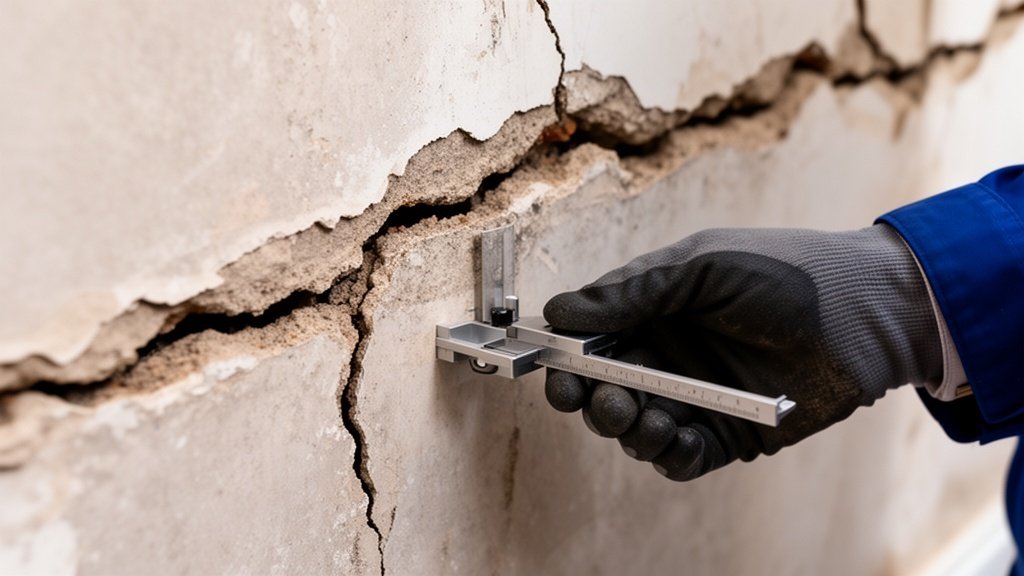
Finding cracks in the walls of a property you're hoping to buy is one of those moments that makes your heart sink a little. Are they structural? Are they serious? Do they mean the whole deal is going to fall apart — or worse, that the building itself might?
Here's the reassuring truth: the vast majority of cracks our surveyors find in Coventry properties are not structural, not serious, and entirely manageable. But some absolutely are serious — and those need expert identification and thorough assessment before you proceed.
This guide will help you understand the difference, so you can approach the situation with confidence rather than panic.
How We Categorise Cracks: The BRE Classification
Qualified surveyors use the BRE (Building Research Establishment) classification system to categorise cracks in buildings, ranging from Category 0 (hairline, cosmetic only) to Category 5 (very severe, structural danger). Here's a summary:
| Category | Width | Description | Action Required |
|---|---|---|---|
| 0 – Negligible | <0.1mm | Hairline, cosmetic only | None — redecoration only |
| 1 – Very Slight | Up to 1mm | Fine cracks, superficial | Redecoration, filling |
| 2 – Slight | 1–5mm | Cracks visible, slight dampness possible | Simple repair, investigation advised |
| 3 – Moderate | 5–15mm | Doors/windows stick, gaps visible | Structural investigation required |
| 4 – Severe | 15–25mm | Significant structural movement | Urgent structural engineer input |
| 5 – Very Severe | >25mm | Major disruption, danger of collapse | Immediate expert intervention |
Cracks That Are Usually Harmless
The following types of cracking are extremely common in Coventry properties and are generally not a structural cause for concern:
Hairline Cracks in Plaster
Especially common in older properties, hairline cracks in internal plaster are usually the result of normal thermal movement — the building expanding and contracting with temperature and humidity changes over the seasons. They're cosmetic and require nothing more than filling and redecorating.
Cracks at Corners of Window and Door Openings
Small diagonal cracks radiating from the corners of windows and doors are almost universal in properties of all ages. They typically occur because window and door frames are the 'weak points' in a wall structure where stress concentrates. Unless they're wide (over 5mm) or showing signs of active movement, they're generally not a concern.
Cracks in Render
External render cracks are extremely common — particularly in older Coventry properties where the render has dried out, shrunk or hasn't had adequate key to the masonry behind it. They can allow water ingress if not addressed, so they should be repaired, but they're not structural.
Cracks That Warrant Closer Investigation
Diagonal Staircase Cracks in Brickwork
Diagonal cracks that follow the mortar joints in a staircase pattern through external brickwork can indicate differential settlement or subsidence. They're not always serious, but they warrant thorough investigation — especially if they're wider than 5mm, if they appear on multiple elevations, or if they appear to be active (still moving).
Horizontal Cracks in Walls
Horizontal cracks, particularly in the outer leaf of cavity walls at or near ground level, can indicate excessive pressure from soil or tree roots against the wall — or in some cases, the failure of wall ties in 1930s–1970s properties. These need professional assessment.
Cracks Accompanied by Other Signs of Movement
If you see cracks alongside sticking doors or windows, sloping floors, gaps between walls and ceilings, or displaced chimney stacks, there's likely to be active structural movement that needs investigation by a surveyor or structural engineer.
Cracks and Subsidence
One of the most serious causes of cracking is subsidence — where the ground beneath a building is shifting, causing the foundations to move unevenly. Coventry has a number of areas where subsidence risk is higher due to clay soils, tree root activity, and the legacy of historical mining. See our dedicated guide on subsidence and how our surveys detect it.
What Happens When Our Surveyors Find Cracks?
When our surveyors find cracking during an inspection, we don't just note it and move on. We:
- Classify the cracks using BRE guidelines
- Assess whether the cracking is historic (old, stable) or potentially active
- Consider the pattern and distribution of cracking in context
- Look for accompanying symptoms — door binding, floor slopes, etc.
- Recommend further investigation by a structural engineer if warranted
- Provide a clear explanation of what the cracking most likely indicates and what action is appropriate
Cracks FAQ
Not necessarily. Most cracks are cosmetic or very minor. Even properties with genuine structural issues can be purchased — provided the defects are correctly identified, the cost of remediation is factored into the price, and appropriate specialist advice is taken. A professional Level 3 survey gives you the information you need to make that decision with confidence.
For minor cracking, yes — lenders are unlikely to have concerns. For more significant cracking that points to structural movement or subsidence, the lender's valuer may flag the issue and require a specialist structural report before proceeding. Our surveys provide the detailed assessment that lenders need.
You can monitor a crack yourself by applying a small piece of tell-tale tape or pencilling a line across the crack at either end and dating it. If the crack extends beyond your mark over several weeks, it's active. However, a professional assessment by a surveyor will give you far more reliable information than DIY monitoring.
Worried About Cracks in a Coventry Property?
Our RICS regulated surveyors provide clear, honest assessments of structural cracking. Get a free quote today.
Request Free QuoteRelated Articles
Book a Structural Survey
Coventry Surveyors — expert assessment of structural issues across Coventry and Warwickshire.