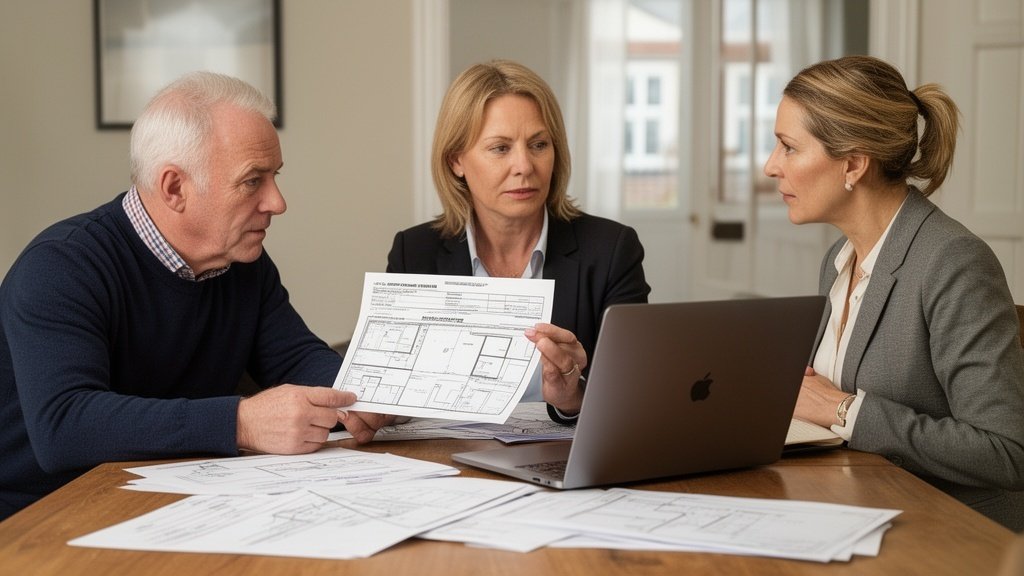
One of the things I love most about my job is the moment a client rings to tell me that the survey report I wrote them saved them £8,000, or £12,000, or more. It happens regularly. A building survey from a RICS regulated surveyor isn't just a document that tells you about a property's condition — it's a powerful, professionally credible tool for negotiation.
In Coventry's property market, many buyers accept the asking price without question. Others use their survey strategically to make informed decisions and get the property at a price that properly reflects its actual condition. The difference between these two approaches can be thousands of pounds.
When Should You Negotiate After a Survey?
Not every survey finding warrants a renegotiation. Minor cosmetic issues — hairline cracks, a tap that drips, a garden that needs tidying — are part of normal property ownership and don't give you grounds to reduce the price. The situations where negotiation is clearly justified include:
- Significant defects the seller wasn't aware of or didn't disclose — rising damp, structural movement, roof failure, drainage problems
- Works required to bring the property to a safe or habitable standard — non-compliant electrics, asbestos, failing boiler systems
- Material issues that affect the value of the property — subsidence, Japanese knotweed, planning irregularities for extensions
- Any defect where the cost of remediation is significant — as a rough guide, anything costing more than £1,000–£2,000 is worth raising
How to Approach the Negotiation
Step 1: Understand Your Survey Report
Before you can negotiate effectively, you need to understand what the survey actually found. Go through the report carefully — focus on any Condition Rating 3 items (the most serious) and any items where our surveyor has specifically recommended further investigation or noted significant repair costs. If anything isn't clear, ring us — we're always happy to talk through the findings with you.
Step 2: Get Repair Estimates
For major items, get independent contractor estimates for the cost of remediation. These give you a concrete, evidence-based figure to work with in the negotiation. Two or three competitive estimates are better than one. Your survey report will include recommended actions for each defect, which you can share with contractors to get accurate quotes.
Step 3: Prioritise Your Negotiating Points
Don't try to renegotiate on every single thing the survey mentions — that approach tends to alienate sellers and estate agents, and can undermine what is actually a strong position. Focus on the material issues: the things that are genuinely significant and can be substantiated with repair estimates. Minor issues can be left out of the negotiation or noted as a reason for the asking price being at the lower end of acceptable.
Step 4: Make a Structured, Evidence-Based Request
Go back to the seller (via the estate agent) with a structured, professional communication. Something like:
"Following our RICS Level 3 survey, we've identified the following issues that require attention: [list issues]. We've obtained independent contractor estimates for the required remediation work totalling £[X]. On this basis, we'd like to request a price reduction of £[Y] to reflect the additional costs involved."
Attaching relevant sections of the survey report and the contractor estimates gives your request credibility. You're not just asking for money off — you're presenting a factually supported, professionally validated case.
Step 5: Know Your Alternatives
A price reduction isn't the only option. Depending on the circumstances, you might instead request:
- Specific repairs: Ask the seller to complete the works before completion — useful for straightforward items like replacing a failed boiler or repairing a leaking roof.
- A financial retention: Where a sum is held back from the purchase price until specified works are completed post-completion. Useful when you're happy to do the work yourself but want financial protection.
- An extension of the search period: If specialist investigations are required — for example, a structural engineer's report on subsidence — ask for more time to complete these before exchanging.
Real Coventry Case Studies
Case Study 1: Leaking Roof, £6,000 Saving
A couple buying a 1950s detached in Cheylesmore received a Level 3 survey that identified the main roof as at end of life, with the flat roof over the double garage requiring immediate replacement. Total repair estimate from two contractors: £6,200. They requested a £6,000 price reduction. After brief negotiation, the seller agreed to a £5,500 reduction. Survey cost: £750. Net saving: £4,750.
Case Study 2: Undisclosed Subsidence, £12,000 Saving
A property in Earlsdon showed clear signs of historical structural movement in the rear addition. Our Level 3 survey recommended a specialist structural engineer's investigation. The investigation confirmed old, stabilised subsidence — manageable but properly reflected in the price. After the full picture was established, our client successfully negotiated a £12,000 reduction and secured specialist insurance in place. Survey cost: £820. Net saving: £11,180.
Case Study 3: Electrical Compliance Issues
A Victorian terrace in Coundon had original 1970s wiring that the Level 3 survey flagged as a Condition 3 defect. We recommended a full electrical installation condition report (EICR) and likely full rewire. An EICR confirmed full rewire required: estimated cost £4,500. Seller agreed to reduce the price by £4,000. Survey cost: £680.
What If the Seller Won't Negotiate?
Some sellers will refuse to reduce the price or make concessions — particularly if they're in a strong market position with multiple interested buyers. In that scenario, you need to make a decision: are you still comfortable buying the property at the agreed price, knowing the repair costs you'll face? Or do the figures simply no longer stack up?
This is where having a detailed, professional survey report is invaluable. It gives you the information to make that decision clearly and with full knowledge — rather than guessing and hoping. If you walk away, you can do so confidently. If you proceed, you do so with eyes open.
FAQs
It's a risk, but a small one in most cases. Sellers generally understand that surveys produce findings and that buyers may want to renegotiate. As long as your request is reasonable, evidence-based and professionally presented, most sellers will engage constructively. The key is not to be aggressive or to raise trivial issues alongside significant ones.
Base your request on the substantiated cost of remediation, not on what you'd ideally like to pay. If the total repair cost is £8,000, requesting £8,000 is entirely reasonable — you may well not get the full amount, but it gives you room to negotiate to a mutually acceptable figure. Going in too high with an unsupported figure will undermine your credibility.
Get a Survey Report You Can Negotiate With
Our RICS Level 2 and Level 3 survey reports are professionally produced, credible documents that give you real negotiating power. Get a free quote for your Coventry property survey today.
Request Free QuoteRelated Articles
Book Your Survey Today
Coventry Surveyors — trusted RICS-accredited surveyors across Coventry and Warwickshire.